In 2018, the Maryland Office of the Attorney General launched a Grand Jury investigation concerning child sex abuse in the Archdiocese of Baltimore. Subpoenas to the Archdiocese, individual parishes and religious orders uncovered "hundreds of thousands of documents" which reputably inform of child sex abuse. Throughout the course of the Attorney General's investigation, an additional three hundred victims and witnesses of abuse contacted the office to share information. The Interim Report of the Attorney General's office reads: "From the 1940s through 2002, over a hundred priests and other Archdiocese personnel engaged in horrific and repeated abuse of the most vulnerable children in their communities while Archdiocese leadership looked the other way [...] Over 600 children are known to have been abused [...] but the number is likely far higher."
Hoya Saxa is an ongoing project to educate the public of Georgetown University’s relationship to the ongoing crisis of child sex abuse in the Catholic Church. This relationship includes the publication of Catholic propaganda and the sheltering of known child sex abusers. According to an investigation by The Hoya, 14 of Georgetown University’s religious leaders in recent history have been credibly or plausibly accused of sexual abuse. The university has thus far acknowledged abuse allegations against only four.
Hoya Saxa
Noun
(Epistemology) A belief or worldview that survives—if not, thrives—despite an overwhelming body of contrary evidence.
(Politics) The battle cry for the worldwide criminal prosecution and ultimate destruction of the Roman Catholic Church and the Society of Jesus.
(Psychology) A cognitive bias in which a person is unable to change their mind despite an overwhelming body of evidence that proves them wrong and a lack of evidence that proves them right.
Background
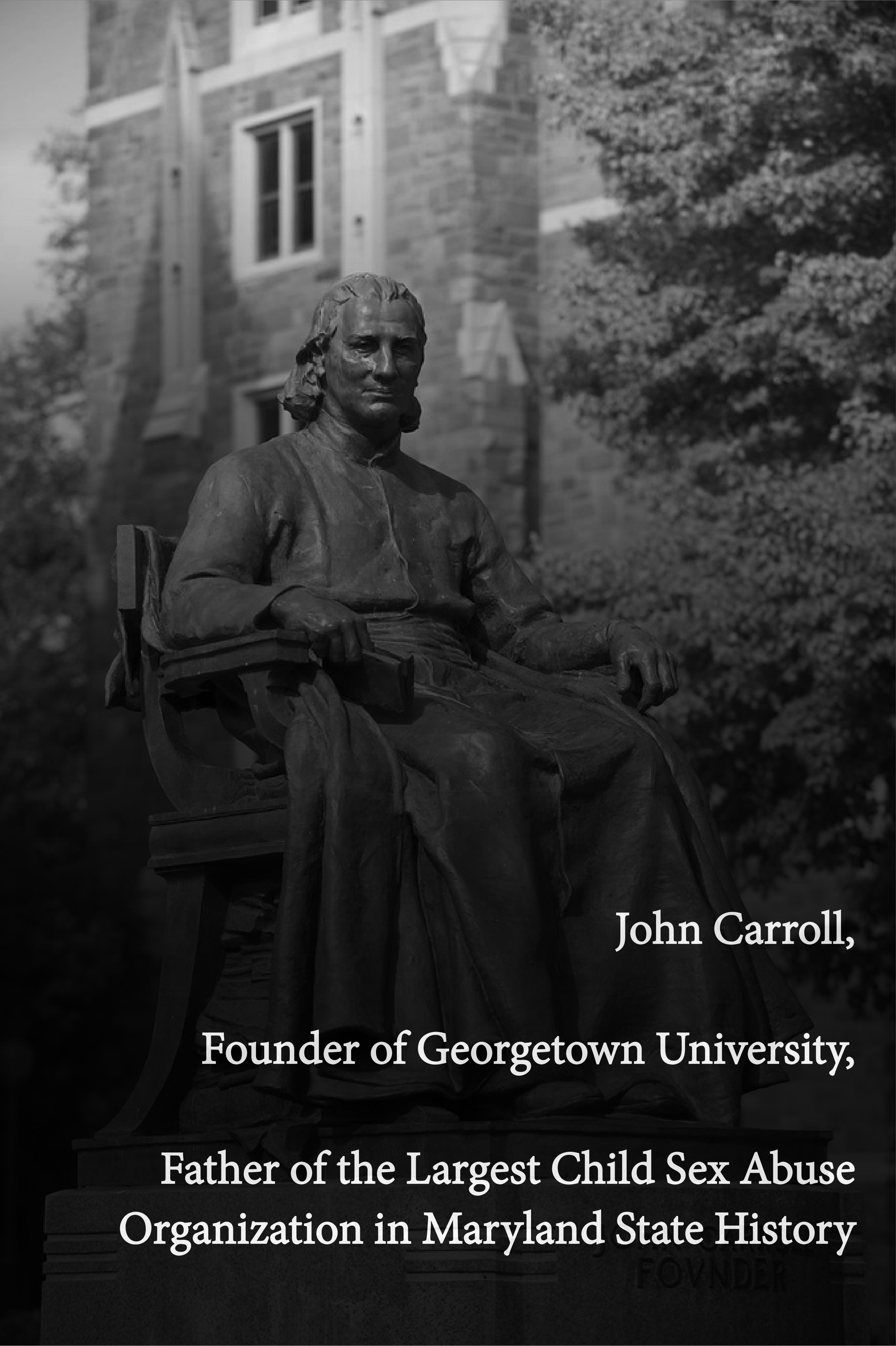
Georgetown College was founded in 1789, the same year as the Diocese of Baltimore. John Carroll, a Maryland native, founded Georgetown College as an institution that could "give consistency" to Catholic views in the United States. Amongst these views, the inferiority of Black Africans and divine approbation of slavery was most consequential. Georgetown University: A Documentary History shares: "Georgetown was a southern college in the antebellum period. Of its alumni who served in the Civil War, more than four-fifths were Confederates." The religious motivations of this political inclination are covered in our Petition for a Secular Georgetown.
John Carroll was named the first Catholic Archbishop in the United States in 1808, presiding over the newly established Archdiocese of Baltimore. Regarding the conduct of this Archdiocese from 1940 to 2002, the Maryland Attorney General's office writes: "The incontrovertible history uncovered by this investigation is one of pervasive and persistent abuse by priests and other Archdiocese personnel."
Where did Child Sex Abuse Occur in the Archdiocese of Baltimore?
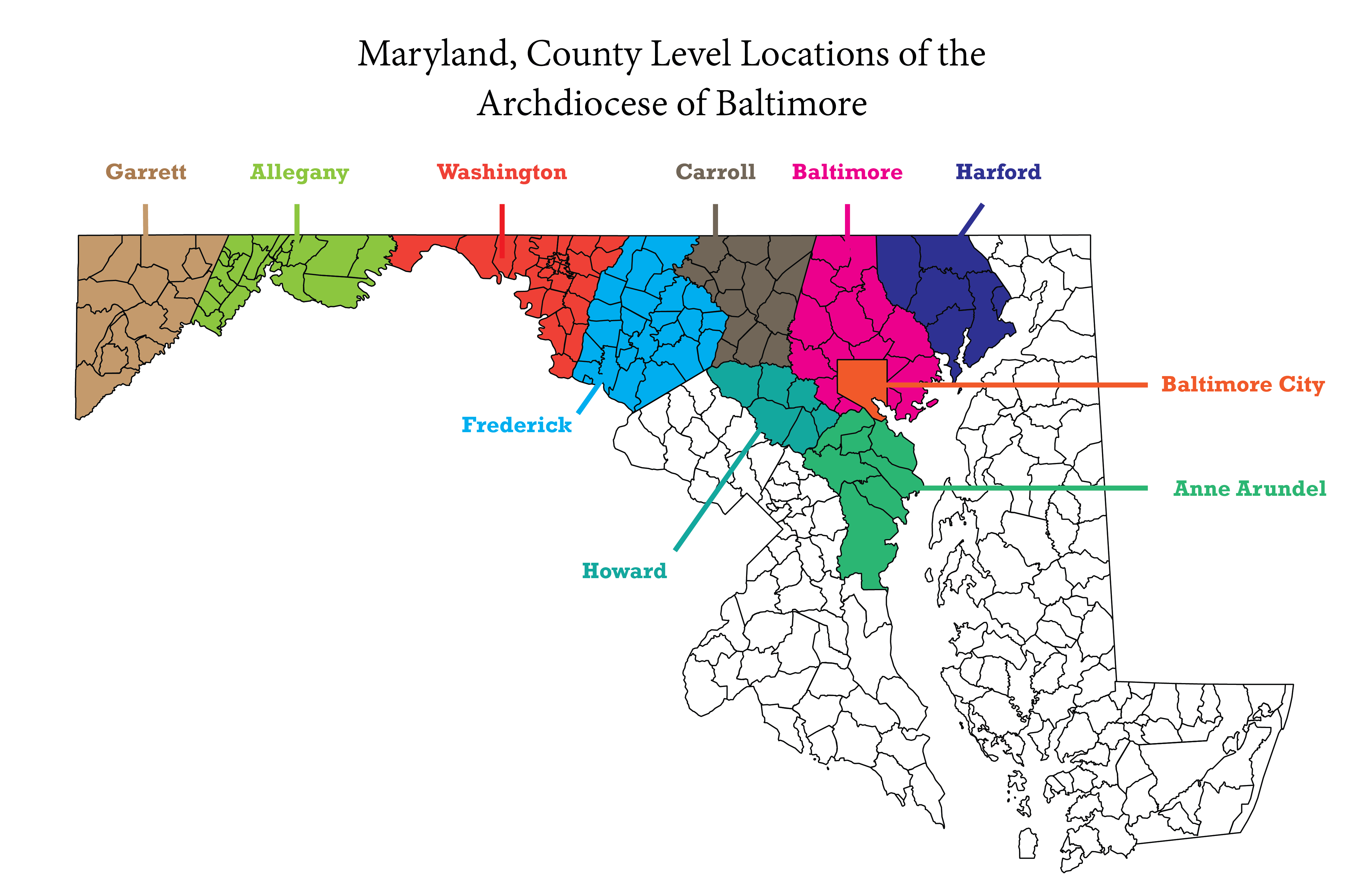
Clergy from the Archdiocese of Baltimore sexually abused children in every county where they operate. Today, the archdiocese operates in Baltimore City and in nine of Maryland's 23 counties: Allegany, Anne Arundel, Baltimore, Carroll, Frederick, Garrett, Harford, Howard and Washington.
Time and again, members of the Church’s hierarchy resolutely refused to acknowledge allegations of child sexual abuse for as long as possible. When denial became impossible, Church leadership would remove abusers from the parish or school, sometimes with promises that they would have no further contact with children. Church documents reveal with disturbing clarity that the Archdiocese was more concerned with avoiding scandal and negative publicity than it was with protecting children.
- Attorney General's Report on Child Sexual Abuse in the Archdiocese of Baltimore
How many Children were Sexually Abused?
600 children are confirmed victims of sexual abuse from members of the Archdiocese of Baltimore. The Maryland Attorney General's report, however, strongly cautions that the total number is higher. Children whom suffer non-consensual, sexual acts suffer life-long emotional and psychological trauma. Symptoms include: vulnerability to substance abuse, suicide, challenges in emotionally connecting to spouses or other people close to them, depression, anxiety, anger, eating disorders and even chronic physical pain. For the majority of victims, a public display of their experience is too heavy a burden.
Statistics corroborate the preceding. The National Crime Victimization Survey (NCVS) is an annually conducted survey of the United States, sampling 240,000 persons in 150,000 households for nationally representative rates of criminal victimhood. NCVS data suggests that only 33.9% of all rapes and sexual assaults were reported to police in 2019—a figure which fell to 22.9% in 2020. When asked about sexual acts suffered as minors, an independent study of 4,008 women found that only 11.9% of those whom were raped as minors reported it to the police. The implication of these numbers is self-evident.
The full extent to which members of the Archdiocese of Baltimore sexually abused children will never be known.
Who were these Children?
Childhood sexual assault victims share characteristics at the time of their abuse. Shy, unconfident and vulnerable children from dysfunctional families were primarily targeted by clergy, who presented themselves as friends and protectors. Children most devoted to the church were particularly vulnerable to sexual predation: "altar severs and choir members, those who participated in church youth organizations and the Scout troops, and especially those who worked in the rectories answering telephones in the evening and on the weekends." After violating these children, clergy would frame their abuse as "God's will" and threaten their victims with eternal damnation should they ever inform a parent or civil authority.
The duration and scope of the abuse perpetrated by Catholic clergy was only possible because of the complicity of those charged with leading the Church and protecting its faithful. Leaders of the Archdiocese repeatedly dismissed reports of abuse and exhibited little to no concern for victims. They failed to adequately investigate complaints and made no effort to identify other victims or corroborate alleged abuse. They transferred known abusers to other positions of equal authority and access to children. They focused not on protecting victims or stopping the abuse, but rather on ensuring at all costs that the abuse be kept hidden. The costs and consequences of avoiding scandal were borne by the victimized children.
- Attorney General's Report on Child Sexual Abuse in the Archdiocese of Baltimore
Church Cover Up
Prior to the involvement of the Attorney General's office, the Archdiocese of Baltimore handled child sex abuse by conducting "the most inadequate of investigations [...]." When the evidence rendered child sex crimes undeniable, the archdiocese transferred abusing priests to other Catholic establishments—whereupon they might be transferred again after a repeat offense, indefinitely.
Credible allegations of child sex abuse exist for 156 clergy. The church's cover-up was so effective that many of these clergy retired and received financial support from the archdiocese until their death. The abuse was so widespread that the church collaborated with members of the Maryland Judiciary and press to suppress public knowledge. Regarding the sexual abuse of a 13 year-old girl, Archbishop Francis Patrick Keough (1889-1961) privately wrote that the church collaborated with "some excellent Catholic laymen" in the Circuit Court for Baltimore County to bury the case. When the victim's mother attempted to expose judicial corruption and the church's sexual abuse of her child, Archbishop Keough suppressed the story with a "highly placed newspaper man" after "prolonged and extremely careful negotiations."
The parents of the abused often granted clergy unrestricted access to their children, trusting them as men of God. The church was viewed as a resource to assist in the care and upbringing of their children amidst life's challenges. In one case, a mother turned to one of her church's priests to provide her son therapy amidst her ongoing divorce. Her son was abused for three years. In another case, a priest specialized as a therapist and targeted his clients. Tragically, one of his victims was a young girl who sought help after suffering rape elsewhere. The solemn stories of 156 child molesting clergy are detailed in the April 2023 Interim Report of the Attorney General's office.
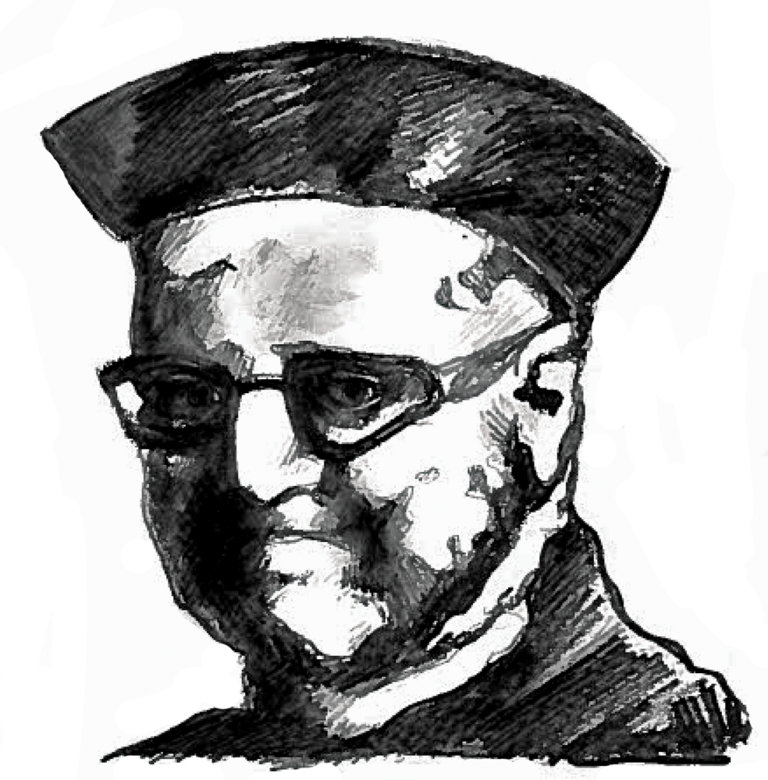
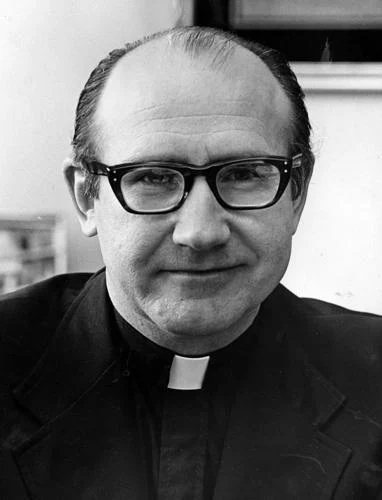
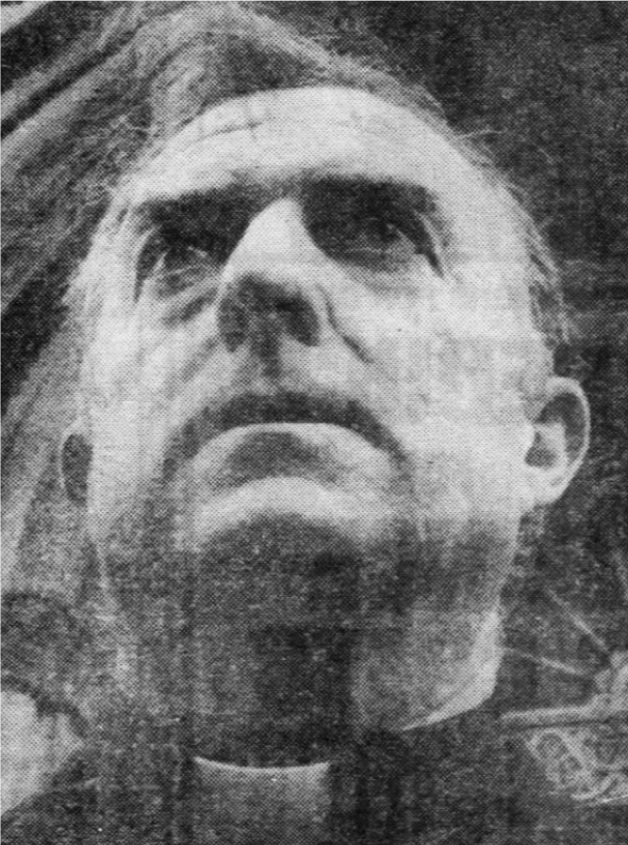
We've mapped the placement of these clergy across the United States, as they navigated the Catholic Church to avoid accountability:
In recent weeks, various diocese and religious orders have made public the names of members of the Catholic clergy who have been credibly accused of sexual abuse of minors over the past six decades. A Maryland Province report, released earlier today, identifies the Jesuits from the Province or who served in the Province and who have been credibly accused of the sexual abuse of minors since 1950. Four individuals named in the report spent time at Georgetown at some point in their careers:
Michael L. Barber, S.J. (Georgetown University Hospital, 1976-1978);
Martin J. Casey, S.J. (Georgetown University, 1997-2006 and Georgetown Jesuit Community, 1973-1997);
Augustine J. Ferretti, S.J. (Georgetown University, 1944-1947);
William J. Walsh, S.J. (Georgetown University, 1966-1967, and Woodstock Theological Center, 1996-1998).
- John J. DeGioia, President of Georgetown University
Georgetown University and Child Sex Abuse
Georgetown University is connected in several ways to child sex abuse in the Catholic Church. Most importantly, by employing several persons whom the Society of Jesus received reports abuse. When such persons are identified by the public or investigative reporters, the university’s response has mimicked that of the church’s. Deny, minimize and ignore. To date, Georgetown University has publicly acknowledged only four of the 14 child abusing clergy who worked on its campus. For many of these persons, the Society of Jesus possessed information of alleged abuse prior to their presence on Georgetown’s campus.
Georgetown University also contributes to the disinformation efforts of the Catholic Church, publishing research with obvious conflicts of interest. In addition to sheltering known abusers, the majority of which remain unacknowledged, the university disseminates statistics on child sex abuse provided by the church. This information is untrustworthy because, as the historical record demonstrates, the Catholic Church dishonestly reports data regarding child abusing clergy—even when under pressure from state governments.
In 2003, Bernard Knoth was credibly accused of sexual abuse by an Indianapolis high school student. The period of alleged abuse ranges from 1986 to 1988, just two years prior to Knoth’s professorship at Georgetown University. After “teaching” at Georgetown for 5 years, from 1990 to 1995, Knoth left Georgetown to preside over Loyola University. After 5 years at Loyola, he was considered to preside over Georgetown University but ultimately not chosen.
Although the allegation against Bernard Knoth was deemed credible by the Midwest Province of Jesuits in 2003, Georgetown University has not publicly acknowledged their connection to him. A Georgetown spokesperson wrote to The Hoya that the university did not learn of their association with Bernard Knoth until 2018—15 years after the first allegation against him was made public. This doesn't explain, however, why Georgetown won't acknowledge their association with Bernard Knoth—and other child sex abusers—today.
According to a 2018 report on clerical abuse by a Pennsylvania Grand jury, Anthony McGinley sexually abused young boys for more than 30 years. The first instance of reported abuse occurred in 1953, 24 years before McGinley’s professorship at Georgetown University. During day trips to funerals and church-associated travels, McGinley gave his victims alcohol before fondling their genitals and performing oral sex. When McGinley’s victims informed the church that they were sexually abused, the church “warned them to be absolutely silent [...]”
From 1977 to 1987, Anthony McGinley taught three courses at Georgetown University: “Psychology of Maturing,” “Seminar in Testing and Assessment of Children,” and “Pupil Evaluation: Tests and Measurements.” Before and during this 5 year period, the Catholic Church knew that McGinley sexually abused young boys. To date, Georgetown has not publicly acknowledged McGinley’s time at the university. In communication with The Hoya, the university also declined to comment on when it first learned of the allegations against McGinley.
The Hoya describes Augustine J. Ferretti as “one of the church’s most serial abusers, with dozens of accusations spanning decades.” Ferretti coerced Native American children as young as 6 or 7 years old to perform sexual acts by withholding food vouchers to their families should they not cooperate. He died in 1982, supported by the Catholic Church throughout his life. He was a doctoral student at Georgetown University from 1944 to 1947.
Fr. Daniel C. O’Connell, S.J., taught undergraduate psychology courses at Georgetown University between 1989 and 1998. He served as chair of the psychology department for six of those years and was granted professor emeritus status upon departing the university. Although the Society of Jesus settled a lawsuit regarding sex abuse allegations against O’Connell in 2003, Georgetown University did not rescind O’Connell’s professor emeritus title until questioned by The Hoya in 2019.
The 2003 settlement agreement stipulated that O’Connell would be forever prohibited from performing public ministry. In 2010, however, another lawsuit was brought against the Jesuits which alleged breach of contract. The Jesuits had allowed O’Connell to teach seminars at Fordham and Georgetown and to work in a parish in Germany.
Fr. Engelbert M. Axer, S.J., was a doctoral student and professor at Georgetown University from 1946 to 1949. After graduating from Georgetown, he maintained a close relationship with the university and represented Georgetown at several prestigious functions. These include, the inauguration of the University of Washington’s 25th president (1958) and celebrations at Waseda University in Tokyo, Japan (1952, 1958).
Engelbert Axer was accused of sexually abusing a boy in 2006, between his time representing Georgetown University in Japan. The alleged abused occured in 1956 and deemed credible in 2008. Nevertheless, Georgetown has not publicly acknowledged its connection to Axer. According to The Hoya, the university first learned of the allegations against Axer in 2019—13 years after they were made public.
Engelbert Axer died in 1989, supported by the Catholic Church throughout his life.
Fr. Jack Kennington worked at the Woodstock Theological Center at Georgetown University between 1981 and 1983. He is confirmed to have committed child sex abuse a year later in 1984, admitting in a court deposition to playing strip poker with the children of a neighbor to the point of nakedness. After convincing his victims that the abuse was “our secret”, he gave them erotic back massages before tucking them into bed. As the abuse developed, Kennington masturbated to pornographic magazines in their presence.
According to The Hoya, the university first learned of the allegations against Kennington in 2019—17 years after they were made public. The Jesuits refused multiple requests for comment regarding Kennington’s work at the Woodstock Theological Center. However, Georgetown University's present-day description of the center reads:
The Woodstock Theological Center was an independent, Jesuit-sponsored research institute located at Georgetown University that carried out theological and ethical reflection on the most pressing human issues of the day.
[…]
This free-standing theological institute was founded in 1973 to stimulate creative theological thinking about critical issues facing the human family, society, and the Church. Over the course of forty years, Woodstock contributed significantly to the rich heritage of Jesuit theological inquiry in service to the Church and the world.
Fr. Martin J. Casey, S.J. was the pastor at Holy Trinity Church on N Street, less than a quarter-mile from Georgetown University. In December 2018, the Maryland Province of Jesuits published a credible allegation of child sex abuse that occured in 1959. From 1973 until his death in 2006, Casey held several administrative roles at Georgetown. His titles include: Assistant Administrator, Treasurer and Associate Minister.
Although Casey's record contains only a single plausible child sex abuse allegation, it is likely he abused more than one child. The Hoya quotes Patrick Wall, an expert on the Catholic Church’s child sex abuse crisis, as saying: “I have never seen, in 25 years, a priest only rape or sodomize one child [...] Once you cross that boundary of behavior, there’s never only one. To make that difference in accounting is simply a public relations move.”
Fr. Michael L. Barber, S.J., served as a chaplain at Georgetown University Hospital from 1976 to 1978. He worked in the department of pastoral care, attending to patients’ spiritual and religious superstitions as they coped with pain, loss, loneliness, trauma or illness. Per a 2018 report by the Maryland Province of Jesuits, Barber “pled guilty to a charge of harassment by offensive touching” that occurred 1994. It is unclear whether this admission was made to a criminal court or an internal church process.
According to an expert cited by The Hoya: “The church can protect senior officials by keeping abusive priests out of civilian legal systems [...] ‘If law enforcement can’t press charges, then law enforcement also can’t get documents [...] And if law enforcement can’t get documents, then they can’t get any evidence. They don’t have any evidence to prove their case or to show what the diocese knew of what he did.’”
Fr. Neil Carr, S.J., began his Jesuit career in 1937 at Georgetown University. By 1966, he was the “provincial superior” of the Buffalo Province of Jesuits and supervised the work of 450 priests across New York and some islands in the South Pacific. 4 years later, Carr’s known period of sexual abuse began.
Throughout the 1970s and 1980s, Carr sexually abused minors at several high schools. The first incident occurred at Jesuit High School in New Orleans, where Carr chaired the department of theology. The second, in the late 1980s while Carr taught at Canisius High School in Buffalo, New York. When an allegation of abuse was brought to the Jesuits relating to the latter of these incidents, the Jesuits removed him from ministry. Until his death in 2013, the Jesuits housed him at Murray-Weigel Hall, a nursing home at Fordham University.
The Hoya gives a vivid account Carr’s abuse during his time in New Orleans: “Ricky Windmann [...] had been sexually abused numerous times in the late 1970s by Peter Modica, a janitor at Jesuit High School [...] In one instance, Modica was raping Windmann when Carr, who had come to Jesuit High School in 1976 as the head of the theology department, walked in. Rather than stopping the abuse, Carr began masturbating and told Windmann to ‘relax’ as Modica continued to rape him [...]”
From the 1950s to the 1980s, Fr. Neil McLaughlin, S.J., sexually abused two minors, including his niece. During this time, McLaughlin also worked summers within the pastoral care department at Georgetown University’s hospital for a total of 18 years. According to the Pennsylvania Grand Jury Report on sexual abuse in the Catholic Church, McLaughlin touched children as young as 10 years old in a “sexual and inappropriate manner”. The Hoya reported in 2019 that: “McLaughlin told the Maryland Province that more survivors of his sexual abuse exist [...] He abused minors from the 1950s through the 1980s in six locations [...]”
In 1983, Fr. Thomas M. Gannon, S.J., was a professor at Georgetown University and the director of the Woodstock Theological Center, a Jesuit research institute on Georgetown’s campus. Throughout its life, Woodstock would employ three of the 14 child sex abusers identified by The Hoya’s investigation.
Gannon’s known periods of sexual abuse span from 1961 to 1998. While he chaired the sociology department at Loyola University Chicago from 1971 to 1983, he allegedly assaulted and harassed at least two graduate students. According to The Hoya, “Gannon’s harassment included a physical attack where he attempted to unbuckle [his victim’s] belt and pull down his pants. Gannon said he wanted to spank [his victim] and pull him over his knee.” Afterwards, he would make unwelcome and unannounced visits to his victim’s apartment.
Gannon taught undergraduate classes at Georgetown University on “comparative social structures and the sociology of religion.” After his departure from the university, he would sexually abuse minors at two institutions.
In 2018, the Maryland Province of Jesuits listed four individuals credibly accused of child sex abuse whom spent time at Georgetown University. Of these four, the Maryland Attorney General’s office confirms that William Walsh—Priest #139—worked on Georgetown University’s campus on two separate occasions.
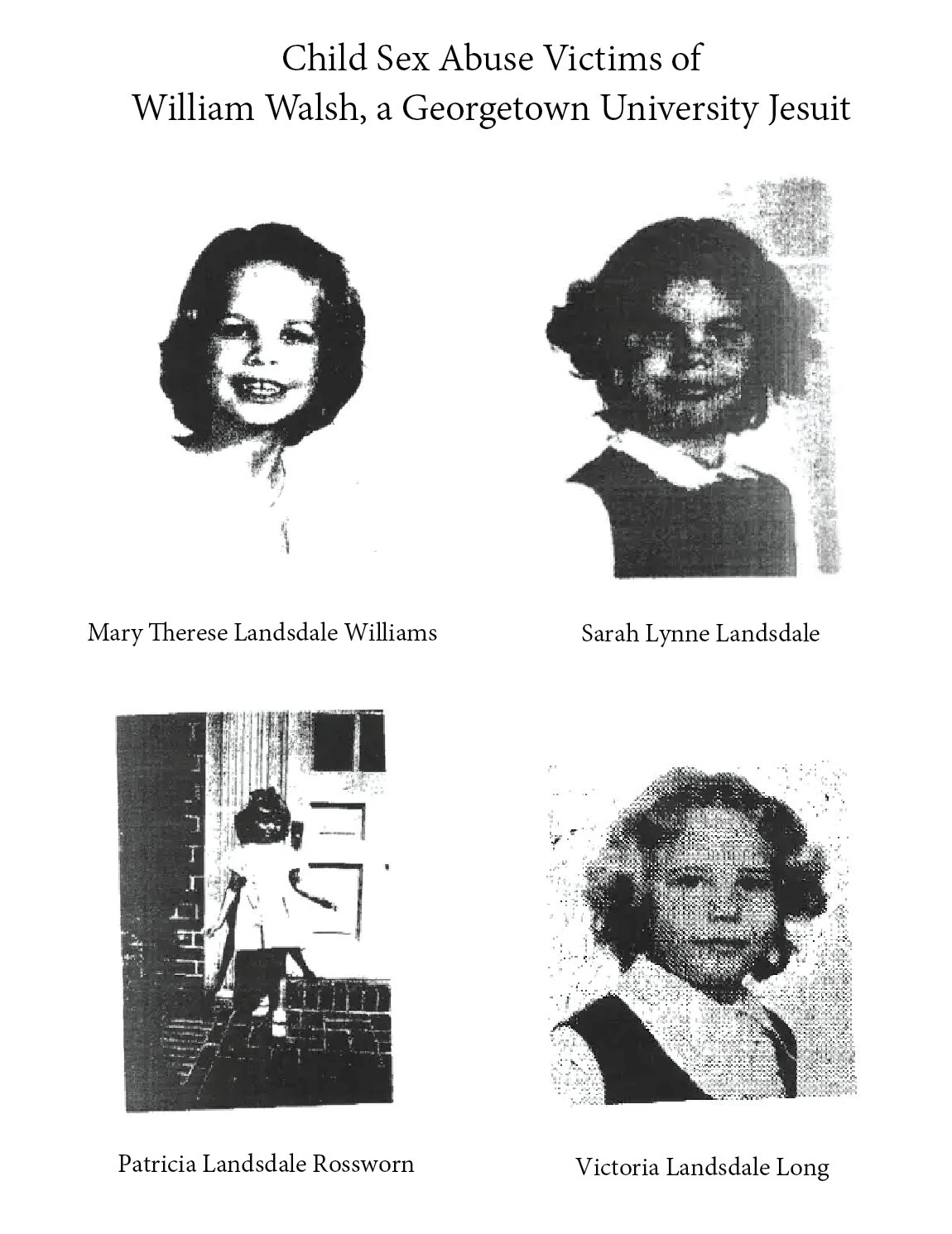
In the 1966 academic year, Fr. William J. Walsh, S.J. taught an undergraduate theology class at Georgetown titled “Christian Marriage”. Several of Walsh’s nieces have spoken publicly about the sexual abuse they suffered during this time. Victoria Landsdale Long’s statement on William Walsh reads: “As best as I can remember Father Walsh sexually abused me more than 200 times, usually while wearing his white collar and priestly clothes. Father Walsh would get me alone to take advantage of my innocence and molest me. These criminal acts took place from the time I was six years old until I was eleven.” Her sister, Mary Therese Landsdale Williams gave a similar account of abuse: “I was a 6 year old little girl when he began to sexually molest me. He molested me more than 300 times through age 12.” William Walsh would continue such conduct for decades, the Society of Jesus indifferent towards the multiple reports of sexual abuse made throughout his placements in Pennsylvania, Maryland and Washington D.C.
William Walsh’s second stay at Georgetown University, beginning in 1996, was specifically owed to credible information which implicated him in the sexual abuse of children. After the Society of Jesus received a letter in which Walsh described his sexual fantasies towards an orphaned 3 year-old girl, they reassigned him to Georgetown University’s Woodstock Theological Center. When Walsh’s abuse became public knowledge in 1998, Georgetown began its tired apologetics:
“William J. Walsh, S.J., is not employed by Georgetown University, nor is he a member of the Jesuit community at Georgetown University.”
The Woodstock Theological Center was an independent, Jesuit-sponsored research institute located at Georgetown University that carried out theological and ethical reflection on the most pressing human issues of the day.
[…]
This free-standing theological institute was founded in 1973 to stimulate creative theological thinking about critical issues facing the human family, society, and the Church. Over the course of forty years, Woodstock contributed significantly to the rich heritage of Jesuit theological inquiry in service to the Church and the world.
To claim that William Walsh was neither employed by Georgetown University nor a member of the Jesuit community at Georgetown, therefore, is dishonest.
From 1969 to 1970, Jesuit priest H. Cornell Bradley worked as a campus minister at Georgetown University. Both before and after this period, Bradley is known to have sexually abused minors as an administrator and teacher at Gozanga College High School. The evidence against Bradley was so conclusive, that a statement from the Maryland Province of Jesuits reads: “[Bradley] is unable to deny the allegations.”
Notably, Georgetown University is not listed among Bradley’s pastoral assignments in the Jesuit's provincial records. Amidst the ongoing crisis of child sex abuse, public disinformation has been a common tactic of the Catholic Church. The Hoya quotes David Clohessy, a former national director of the advocacy group Survivors Network of those Abused by Priests, as saying: “I don’t think it’s a mistake at all [...] We see this more often than not. Church officials act like they’re being forthcoming but very, very often withhold key information to paint a less awful picture about what went on.”
From 1994 to 2003, Sr. Lisa Zuccarelli was an associate dean, professor and chaplain-in-residence at Georgetown University. Among Zuccarelli’s administrative responsibilities was to counsel students regarding academic and emotional issues.
On 27 June 2018, an allegation of child sex abuse was made against Zuccarelli. A student of Zuccarelli's from 1982, during her time as a teacher at Fisher Catholic High School, alleged sexual abuse. Nicholas Snyder of the Lancaster Police Department gave some context on this abuse in an interview with The Hoya: “[The victim] was in the convent to seek some counsel because she was not getting along with her parents [...] She said her father was abusive and that upon receiving some counselling and talking to her, that is when the alleged perpetrator made advances towards her.”
Our community will continue our work to respond to this moment through dialogue, reflection, and action, building on the convenings we held this past semester, ongoing conversations with members of our community, as well as actions taken by official Church bodies to address abuse. These actions provide the context through which we will form our ongoing response.
- John J. DeGioia, University-Wide Email Regarding Child Sex Abuse
Our style is often parodied. Academics are perceived at times as too deliberative, that we establish committees and working groups as ways to evade and avoid tough decisions, that we hide in "theories". Terms like "ivory tower" are not meant as compliments. We are accused of not being a part of the "real world." No doubt some of these descriptions can be true.
- John J. DeGioia, Racial Justice: A Georgetown Response, Continuing the Conversation
Publication of Catholic Propaganda
Georgetown University’s hosting and minimization of child sex abusers on campus are a clear demonstration of the university’s fealty to the Catholic Church. As an academic arm of the church, Georgetown University has used its institutional prestige to lend an air of objectivity to survey research that suffers from obvious conflicts of interest. Aside from a failing to fully disclose its own relationship with abusers, Georgetown University’s research also fails to address disinformation consistently published by the church.
Public awareness of the extraordinary frequency and gravity of child sex abuse in the Catholic Church—not the abuse itself—has prompted efforts at reform from the United States Conference of Catholic Bishops (USCCB). One of these efforts began in 2004, when the USCCB commissioned Georgetown University’s Center for Applied Research in the Apostolate (CARA) to annually survey all dioceses and eparchies for information related to child sex abuse. The results of CARA’s 2022 survey are summarized in the 2022 Annual Report on the Implementation of the “Charter for the Protection of Children and Young People.” Skepticism of this report is warranted.
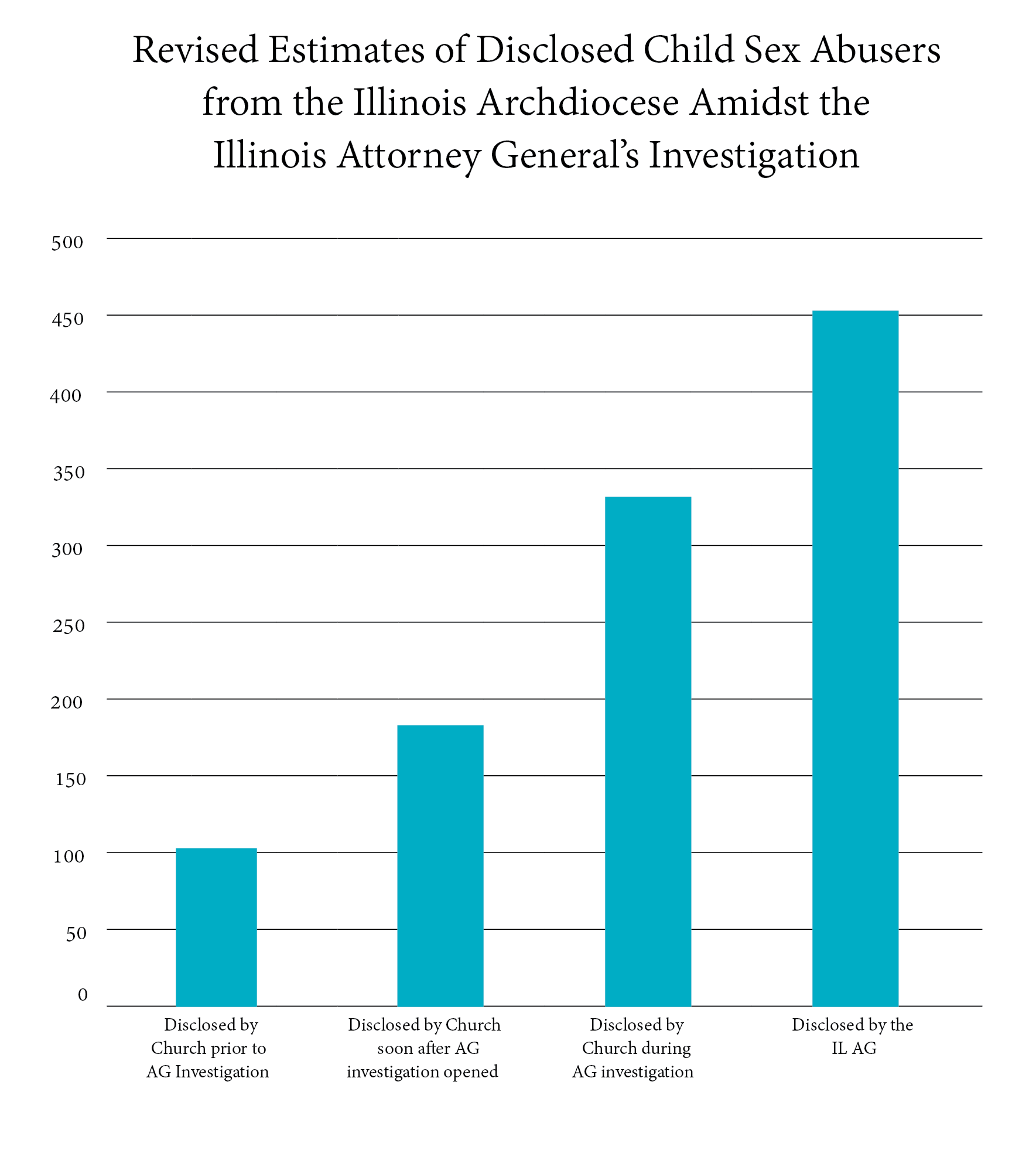
Amidst the many world-wide investigations into child abusing clergy, Catholic institutions initially feign transparency by publishing statistics on child sex abuse that are later revealed false. The reports of the several state attorneys generals into the church are erudite. Concerning their own investigation, the Illinois Attorney General’s Office writes : “At the time the Attorney General announced an investigation into child sex abuse by Catholic clerics, only two of the six Illinois Dioceses […] posted a list of substantiated Catholic cleric child sex abusers on their websites. Between the two of them, they listed 103 substantiated child sex abusers […]” As the investigation developed, however, the Illinois diocese revised this number to 334—a figure shy of the 451 abusers the Illinois Attorney General’s Office ultimately able to identify. The Maryland Attorney General’s Office notes the same pattern of disinformation in their investigation. In 2002, the Archdiocese of Baltimore shared a list of “credibly accused” priests. “The 2002 list was one of the first in the nation but included only 57 names. At that time, the Archdiocese chose not to include any priest who died before the abuse was reported. In 2019, the Archdiocese changed that policy and added the names of 23 priests who were accused of abuse after their deaths. The Archdiocese has continued to add to the list, which currently has 152 names.” The preceding instances of conscious disinformation from the church demonstrate that data from a self-administered, participatory survey of Catholic establishments—conducted by a Catholic institution—are untrustworthy.
In April 2023, the Maryland General Assembly passed a bill eliminating the statute of limitations for victims of child sexual abuse. The Catholic Archdiocese of Baltimore responded by declaring bankruptcy. The Washington Post’s Michelle Boorstein writes:
Some legal analysts said the move by the country’s oldest Catholic diocese could limit damages for some survivors, while other experts said it could more equitably distribute Baltimore’s assets and offer anonymity and streamlined financial awards, which some accusers may value.
But it also means there will be no subpoenas or public testimony before a jury, which for some survivors is a blow to transparency and a crucial loss.
The Archdiocese of Washington operates in several Maryland counties—Montgomery, Prince George’s, Charles, Calvert and St. Mary’s. Therefore, they were rendered vulnerable by the Maryland General Assembly bill which eliminated the statute of limitations for victims of child sex abuse. In order to avoid accountability for shielding child sex abusers from the law, they are arguing in court (in two separate cases) that the bill violates Maryland’s Constitution. If the Archdiocese succeeds, a class-action lawsuit for hundreds of the Archdiocese’s victims will be ineligible for prosecution.
A Maryland judge rules against the Archdiocese of Washington in the above lawsuits. The Archdiocese of Washington is expected to appeal the ruling, escalating the cases to the Maryland Supreme Court.